Power, charging and compressed air for quay, harbour and aquaculture
From diesel to electric.
Hybrid power that cuts diesel consumption on the feed barge. Mobile battery chargers and fast charging for quay and yard, even where the grid is weak. Battery storage and oil-free compressed air for reception and processing.
Four figures from public sources. They show what is possible in the industry, not what your site will achieve. You work that out with your own figures.
The fast chargers are specified for operation from −30 °C to +55 °C, and the mobile battery chargers in containers from −30 °C to +50 °C. The hybrid stations deliver power down to −20 °C.
Can it handle the salt?
Adapted
Coast and harbour set their own requirements. We clarify the protection for your installation in the quote. As an optional service, the equipment can receive extra surface treatment in our own workshop in Norway or Sweden, with a 25-year warranty on the treatment.
Who comes when it stops?
24/7
On-call phone around the clock, all year, and service partners throughout the Nordics. The equipment has remote monitoring, so many faults can be found and fixed without anyone having to go out to the feed barge or the quay.
Who we supply.
From the vessel at the quay to the hatchery on land. One company for power, charging, batteries, compressed air and filters, with service around the clock.
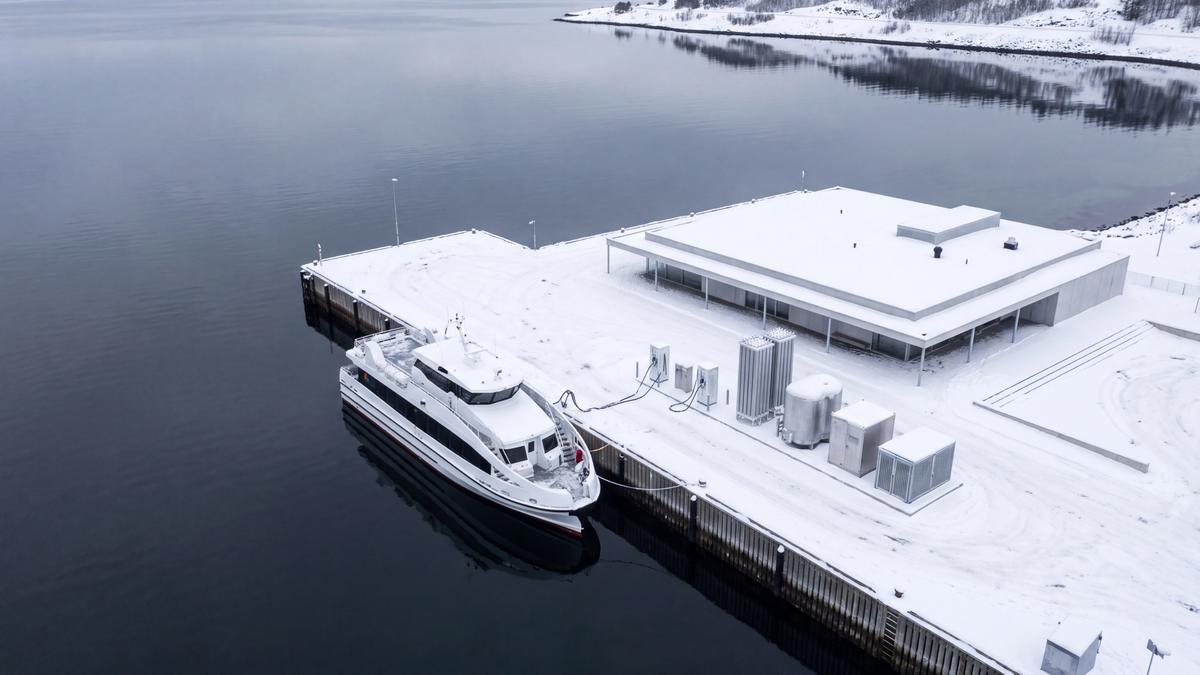
Vessel at the quay
Vessels
Fishing boats, well boats and service boats
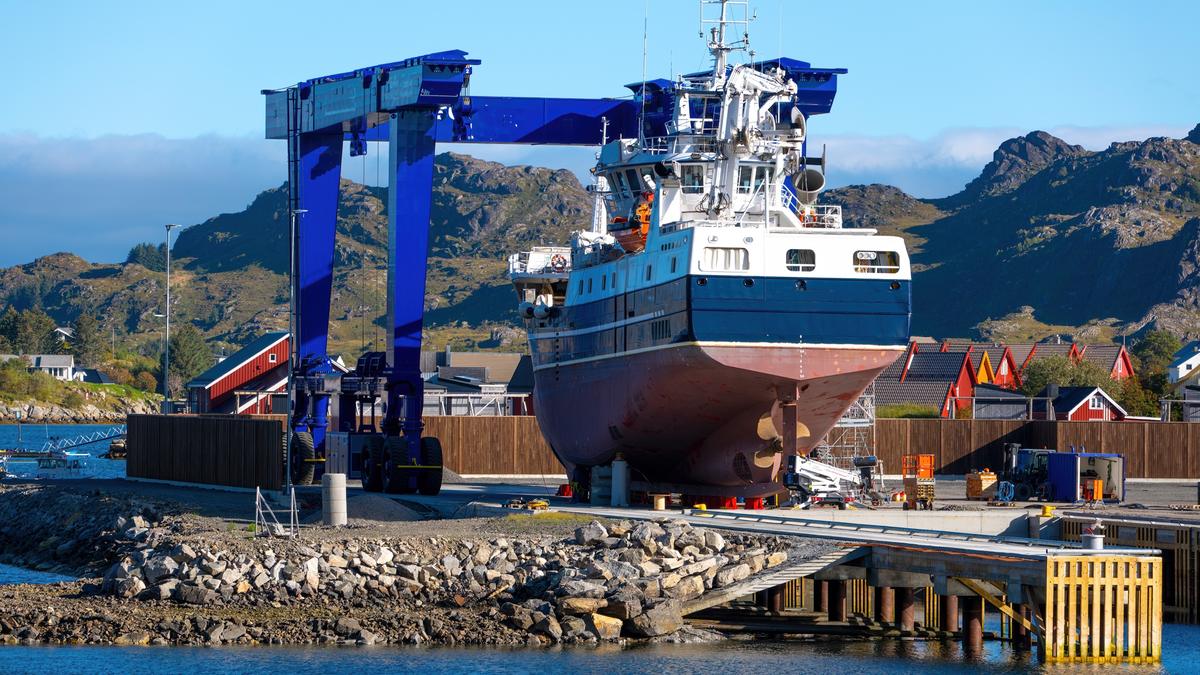
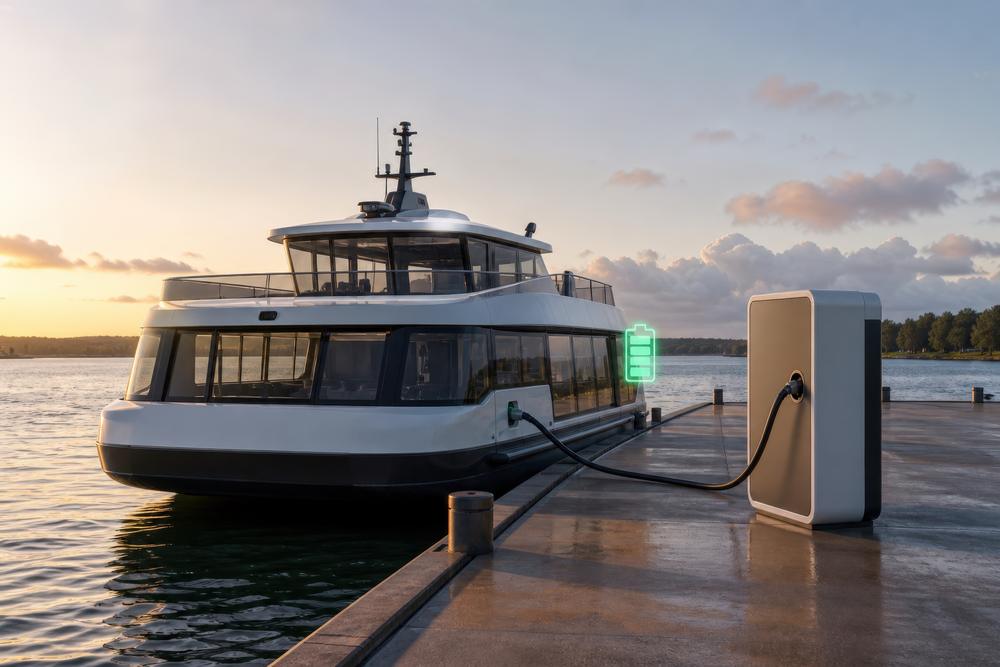
Electric and hybrid vessels need charging at the quay, often where the grid is weak. Slipways and workshops need compressed air and filters.
Most workboats burn most of their diesel while working at the pens. Calculate it
Facilities where the power must never fail. Battery storage as backup and against power peaks, and oil-free compressed air where the air meets the product.
After feed, energy is the largest cost in a RAS facility. Calculate oxygen
Example answerDAV-110.43–2.16 m³/min · 7–13 bar · 11 kW
The test bench.
Ten test programmes that answer immediately. The figures in the fields are examples. Replace them with your own, and we will calculate precisely when you request a quote.
Hybrid operation
A generator running around the clock at low load, compared with hybrid operation where the battery takes the load and the generator only charges.
Runs at 75% load when charging.
Data sheet 80 kVA: 13.9 litres per hour at 48 kW.
Example. The actual value depends on the inverter and load.
GSB-10, GSB-20 and GSB-50 have 2,375 Wp on the roof, GSB-20 Gas has 2,300 W. Enter 0 to calculate without solar.
Example. Look up the figure for your location in PVGIS, the European Commission's free tool.
Diesel saved per year15 803 l
Less diesel31 %
Less CO2 per year42.0 tonnes
Fuel saved per yearNOK 379,300
Generator hours per year8 760 → 2 536
Power from the sun per year1,663 kWh
Today
51 100 l
Hybrid
35 297 l
The battery takes the load. The generator runs fewer hours, and those hours it runs at a good load.
The solar panels alone save 567 litres of diesel and 1.5 tonnes of CO2 per year. Every step counts.
Calculated conservatively: all power from the generator goes via the battery. The solar panels are calculated as annual production, and most of it comes in the summer half of the year. Shore power is not included.
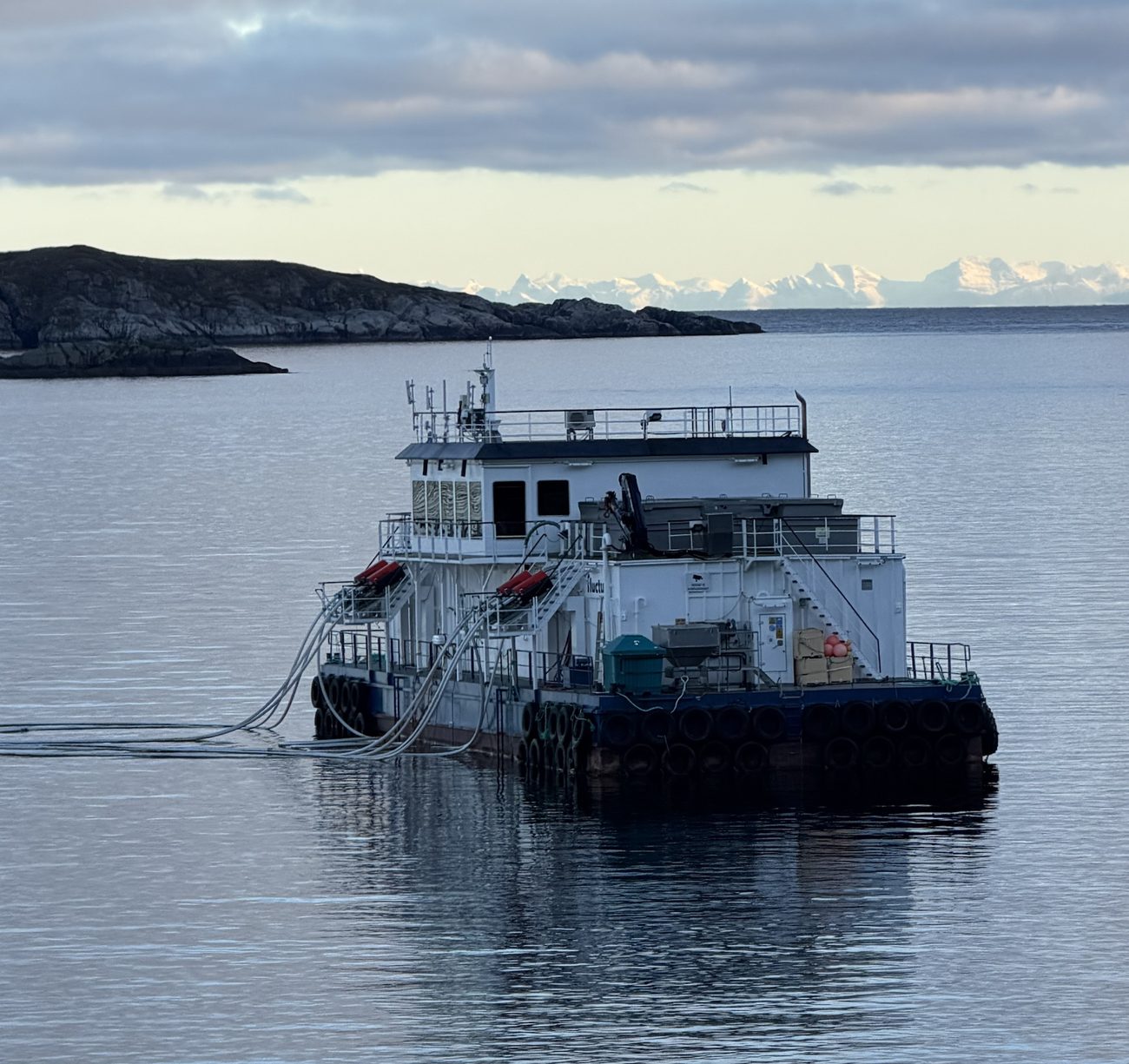
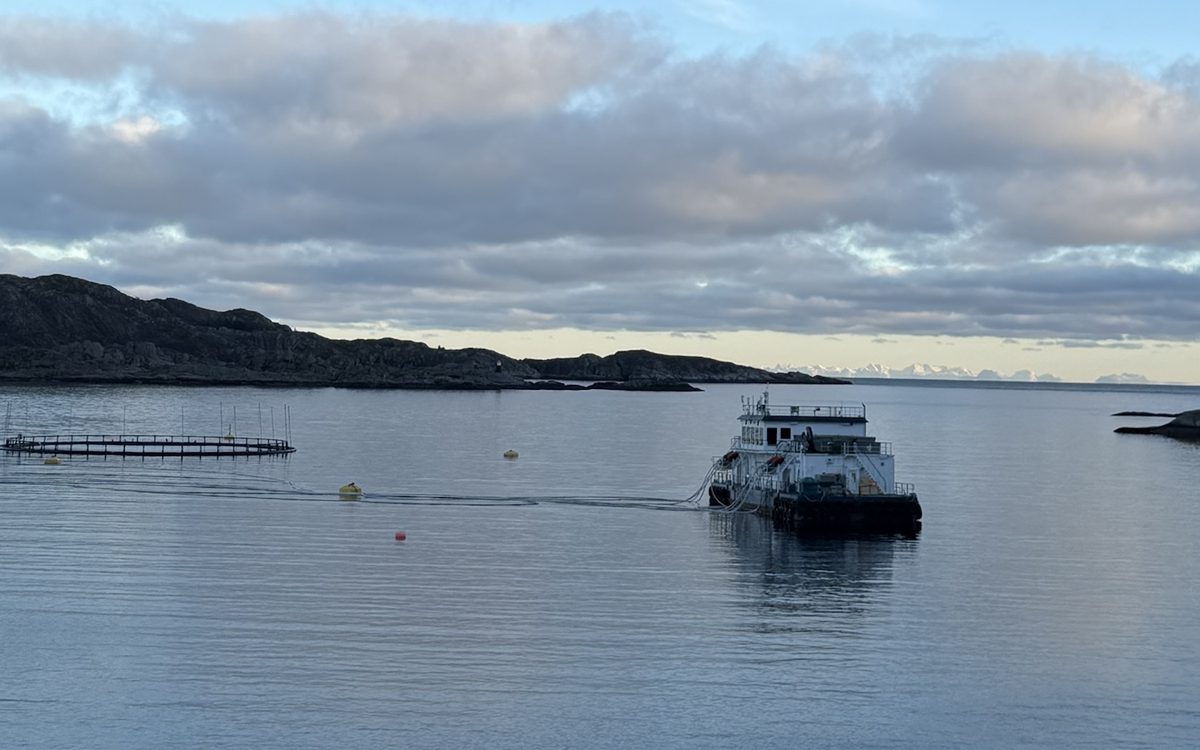
Feed barge
What does the diesel on the barge cost today, and what does the electricity that can replace it cost? Calculated the same way as DNV GL.
Pre-filled with 80 litres per harvested tonne, the figure DNV GL uses (range 52–120). Enter your own figure if you have one.
DNV GL assumes 67 %. An electric motor uses the energy better than a generator set.
Diesel on the barge per year120,000 l
CO2 from the diesel per year319.2 tonnes
Electricity replacing the diesel398,200 kWh
Difference per yearNOK 2,402,200
Diesel
NOK 2,880,000
Electricity
NOK 477,800
With these figures the electricity costs less than the diesel it replaces.
Calculated as in DNV GL (2018): one litre of diesel contains 10.06 kWh, and energy use is 67 % lower with shore power. Cable, substation and grid connection are not included. Where the grid is weak, a battery can take the peaks. If the grid is too far away, see Hybrid operation.
Work at the pens
Most workboats burn most of their diesel while working at the pens. Here you can see what it means when the equipment on board gets electricity instead.
DNV GL assumes 180 litres per day for 100 kW over six hours.
Diesel not burned per year50,400 l
Less CO2 per year134.1 tonnes
Electricity demand per year168,000 kWh
Difference per yearNOK 1,008,000
Diesel
NOK 1,209,600
Electricity
NOK 201,600
Electricity at the pens gives a lower energy cost with these figures. It also gets quieter at the pens.
The example is from DNV GL (2018): 100 kW for six hours a day, 280 days a year. DNV GL estimates that electricity for the work can cut up to 75 % of a workboat's diesel. This requires the barge to have shore power. If the electricity comes from the generator on the barge, the diesel consumption moves there. Cables and outlets are not included.
Shore power at the quay
A vessel lying at the quay with its auxiliary engine running, compared with shore power or battery.
Low load gives higher consumption per kWh.
Diesel not burned per year21 600 l
Less CO2 at the quay per year57.5 tonnes
Power demand per year72,000 kWh
Difference per yearNOK 432,000
Diesel
NOK 518,400
Electricity
NOK 86,400
Shore power gives a lower energy cost with these figures. On top of that, the quay becomes quiet.
Applies to direct emissions from the auxiliary engine. Investment in the installation is not included.
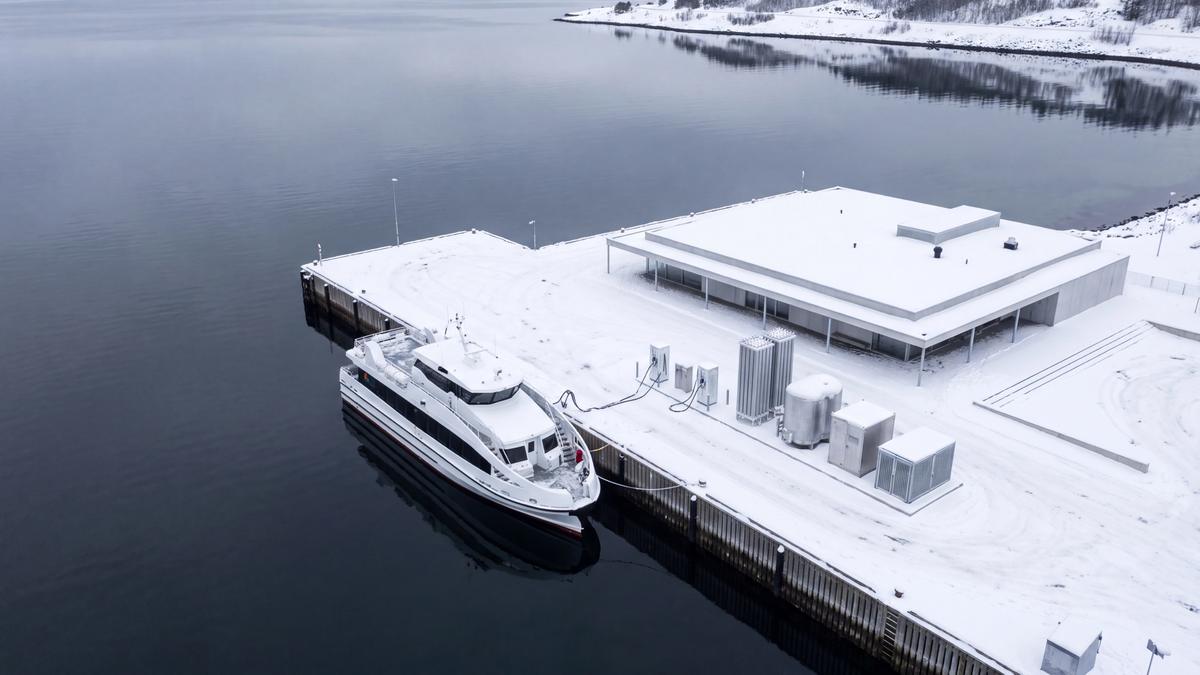
Quayside charging
Will the grid at the quay hold for the charging you need, or must a battery cover the gap?
Battery needed to cover the gap213 kWh
The battery recharges in4,9 t
Demand per day900 kWh
The grid can supply per day1,048 kWh
Demand
150 kW
The grid supplies
44 kW
The grid alone is too weak, but with a battery it works. The battery recharges between the sessions.
The grid is calculated as 400 V three-phase (√3 × 400 V × amperes). Losses and margin are not included. For comparison, the mobile battery chargers range from 203 kWh to 3,344 kWh.
Diesel emissions
From litres of diesel to tonnes of CO2, and what a cut in consumption means.
CO2 today per year133.0 tonnes
Less CO2 per year39.9 tonnes
Diesel saved per year15 000 l
Fuel saved per yearNOK 360,000
Today
133.0 tonnes
After the cut
93.1 tonnes
Calculated with 2.66 kg CO2 per litre of diesel or marine gas oil.
Compressed air
What does a plant save with lower pressure, less leakage and a variable-speed compressor? Calculated for the same amount of useful air as today.
How hard the compressor runs on average.
Should be measured. The figure is an example.
Example. Depends on how much the air demand varies.
Around 7 % less electricity per bar. A clogged filter causes a pressure drop and forces the pressure up.
Teknisk Ukeblad states 80–90 % of the electricity fed to the compressor.
Fill in to see the payback time.
Electricity saved per year91,009 kWh
Less electricity47 %
Saved per yearNOK 109,200
Paid back after–
Heat that can be recovered per year83,193 kWh
Today
195,000 kWh
After
103,991 kWh
Lower pressure, less leakage and the right speed give the same air with less electricity.
The numbers in the fields are examples. The saving depends on the age of the compressor, the working pressure and how much the air demand varies. The heat is calculated from the electricity the compressor uses after the measures, and only has value where the plant can use it. Take a photo of the compressor or fill in the form, and we will calculate for your plant.
Oxygen
How large a generator and compressor are needed to make the oxygen on site, and how much electricity does it take?
Fill in to see the difference per year.
Generator40 Nm³/h
Air demand8.8 m³/min
Compressor, suggestionDAV-55
Electricity per kg of oxygenapprox. 0.8 kWh
Electricity cost per kgNOK 1.0
Difference per year–
The 40 Nm³/h generator covers the demand of 37.6 Nm³/h. DAV-55 has a 55.2 kW motor and is chosen with a 10 % reserve.
Calculated with 1.43 kg per Nm³ of oxygen. The air demand is taken from DENAIR's table, at 8 bar and 20 °C. The electricity is calculated from the compressor's motor power at full production. Dryer, controls, investment and service are not included. Liquid oxygen can still be kept as a reserve.
Demand peaks
The demand charge in the grid tariff is paid for the highest peak in the month. A battery that takes the peak lowers the bill.
Shown on the grid tariff invoice. The figure is an example.
Fill in to see the payback time.
Saved per monthNOK 9,000
Saved per yearNOK 108,000
New power peak150 kW
Paid back after–
Today
250 kW
With battery
150 kW
The battery takes the peak, and the grid tariff is calculated from a lower power.
Simplified calculation. The demand charge and the way the peak is measured vary between grid companies. The battery must be large enough to cover the peak for as long as it lasts.
Backup time
How long does a battery keep refrigeration, freezers, pumps and controls running when the grid goes down?
Refrigeration and freezers, for example, do not run all the time.
Backup time11.1 hours
In days0.5 days
Available energy66.5 kWh
Average load6.0 kW
Maximum load for four hours16.6 kW
This is how long the battery keeps the critical load running without grid.
Simplified calculation with 95 % inverter efficiency. Actual time depends on temperature and load profile. The battery must be connected via an inverter with automatic changeover to work as backup power.
The figures behind it: 2.66 kg CO2 per litre of diesel and marine gas oil is calculated from the emission factor 3.17 kg CO2 per kg of diesel (see Miljødirektoratet's emission factors) and a density of 0.84 kg per litre. Consumption per kWh for the generator is taken from the datasheet. Efficiency and prices of diesel and electricity are examples, excluding VAT. The feed barge and the work at the pens are calculated with the assumptions in DNV GL's report Fullelektrisk fiskeoppdrett (2018, in Norwegian). The measures and sources are collected on the page Save energy.
The equipment.
The figures are taken from the datasheets. Power, battery, tank and voltage are adapted to your plant.
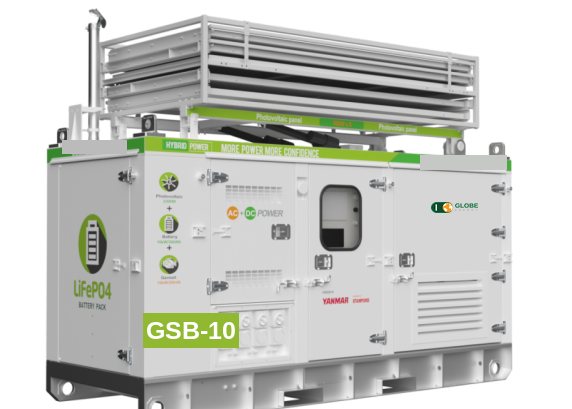
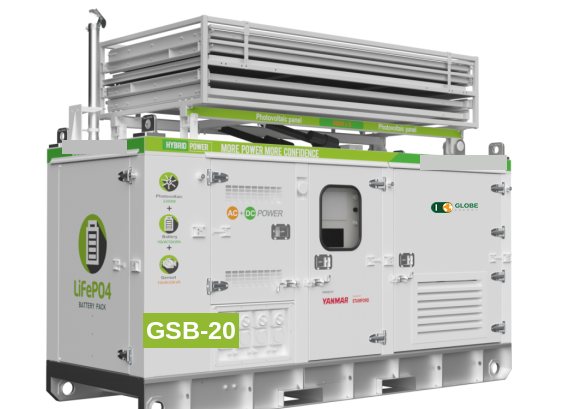
Hybrid power station
The GSB series. Generator, battery and solar panels in one enclosed unit.
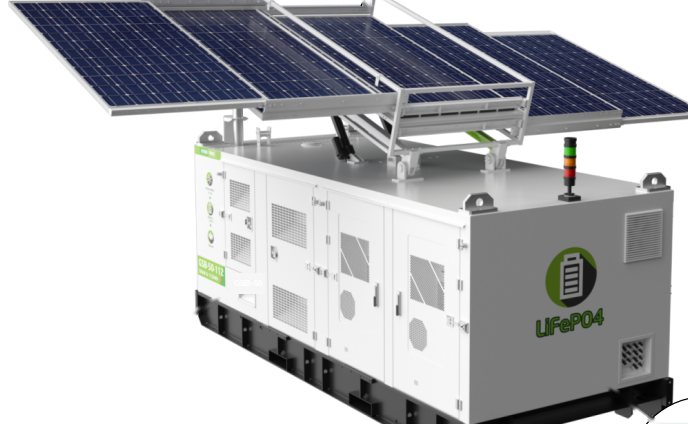
GSB-1010 kVA, 20.4–41 kWhGSB-2020 kVA, 41 kWhGSB-5050 kVA, 112 kWhSolar panels unfolded2,375 Wp on the roof
For feed barges, quays and plants without shore power. The control system uses the solar panels first, then the battery. The generator is the backup and charges the battery, and the switch between sources is not noticed by the load.
The solar panels on the roof give power without emissions and without noise. Every litre of diesel not burned counts for the environment. The solar panels are also a visible sign to customers and neighbours that the plant cuts emissions.
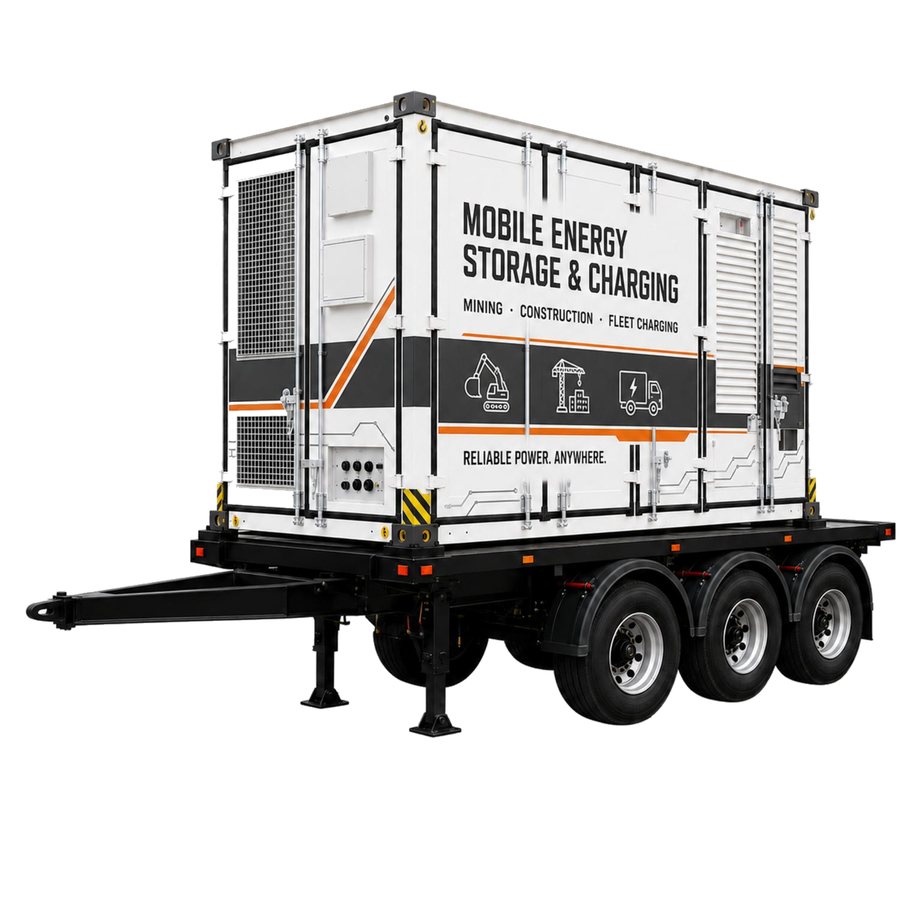
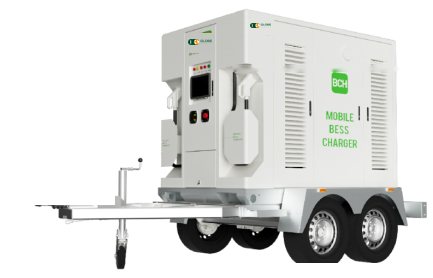
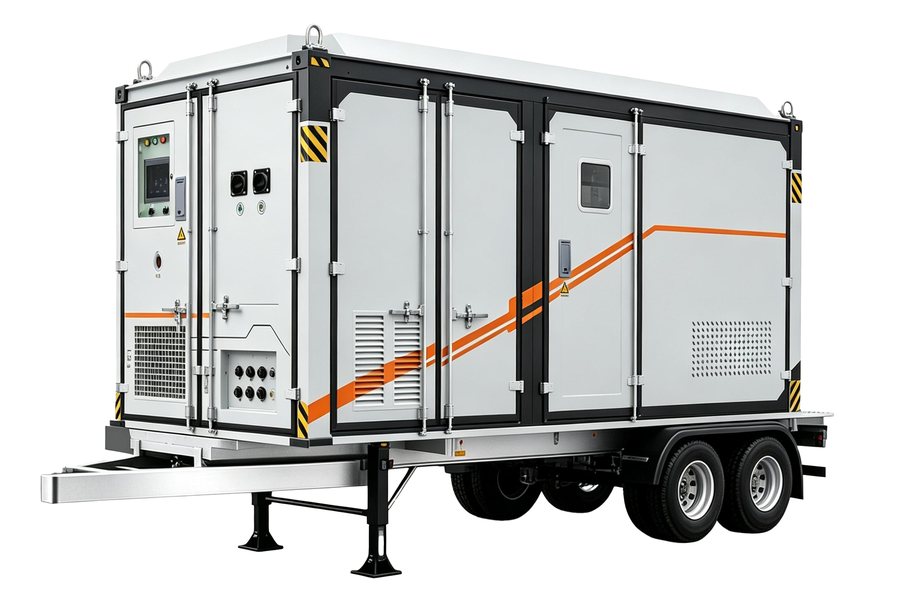
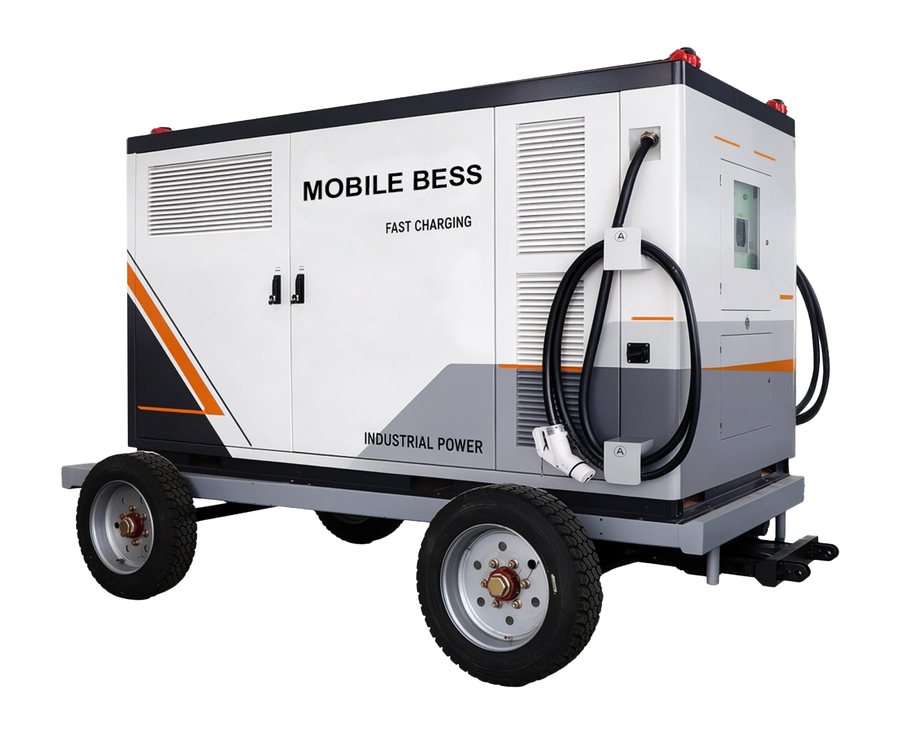
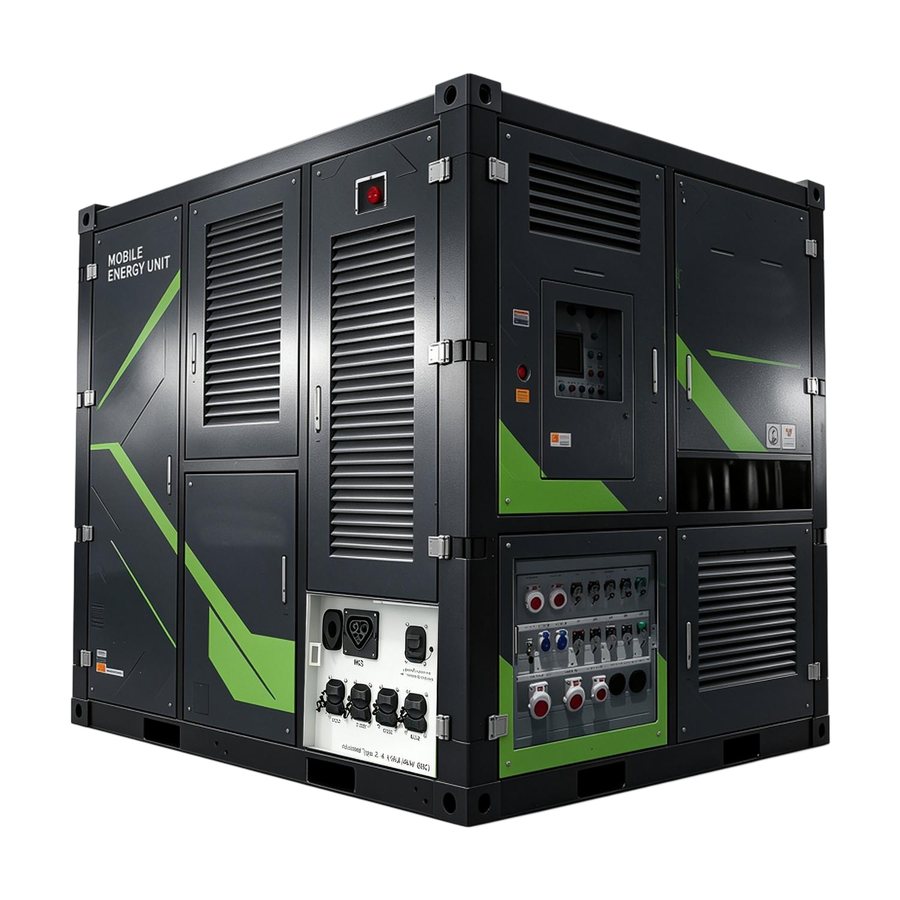
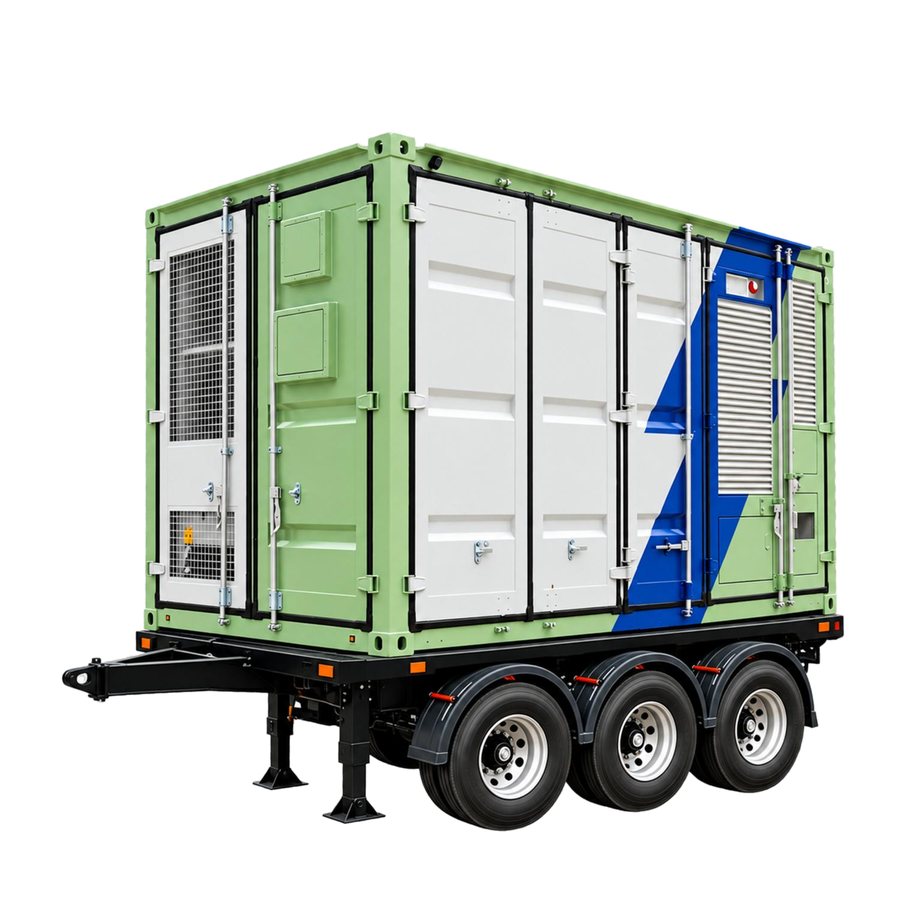
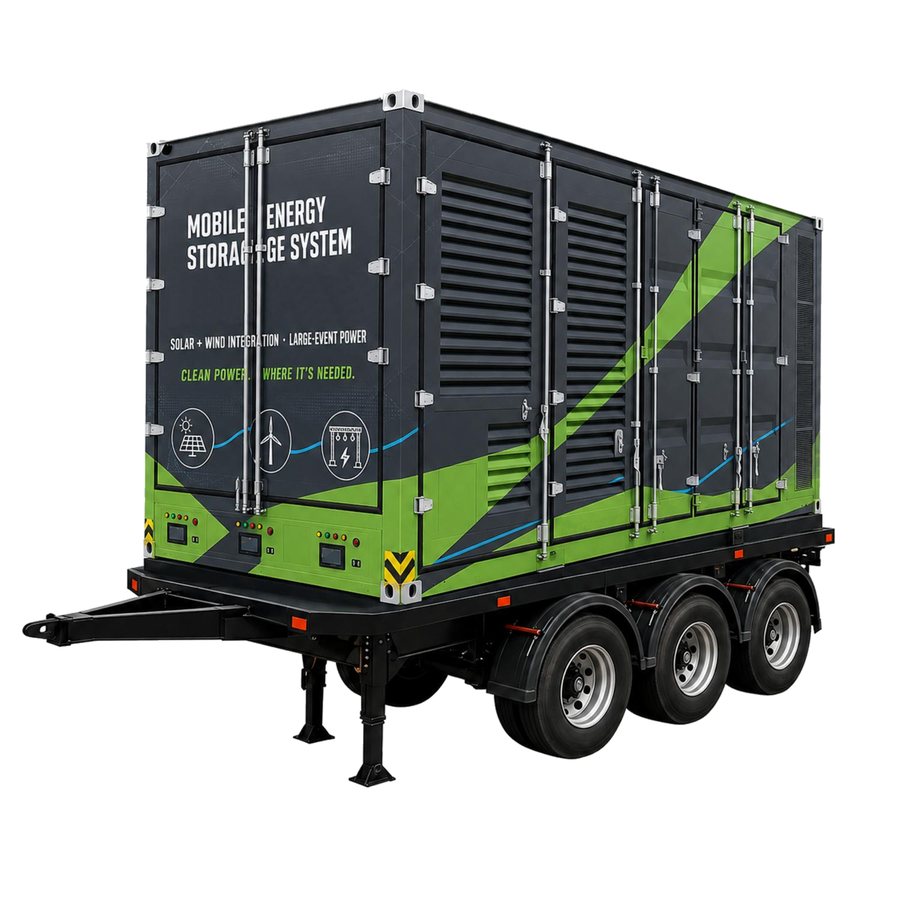
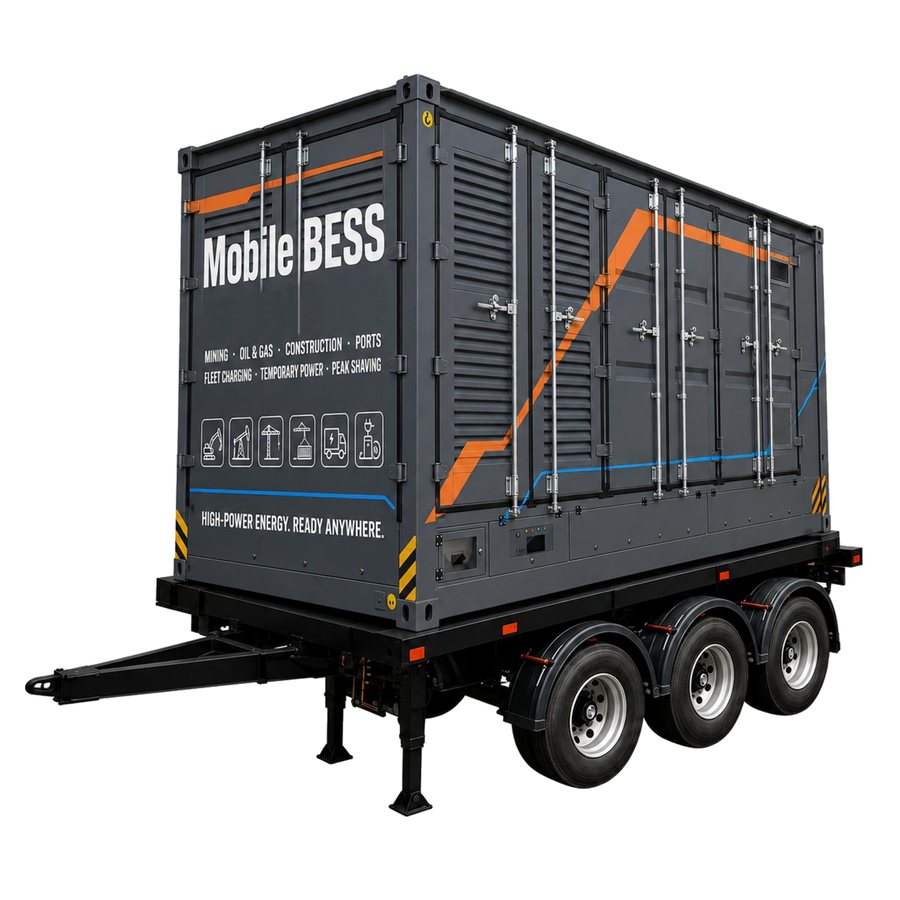
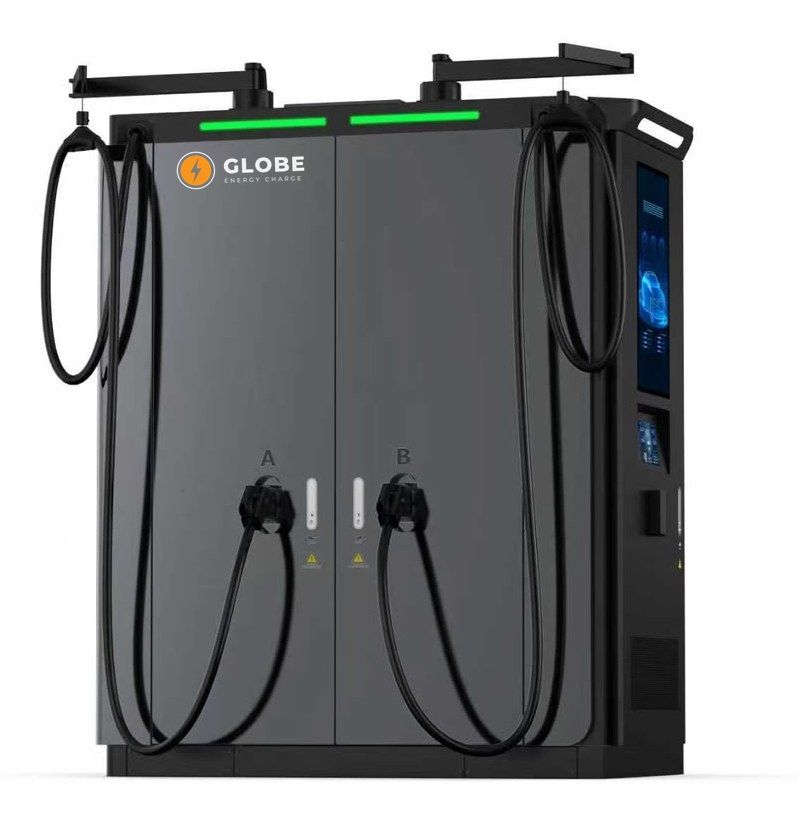
Battery and fast charger in the same unit. From 203 kWh on a trailer to 3.3 MWh in a container.
203 kWh150 kW, on a trailer261 kWh160 kW418–522 kWhUp to 400 kW836–1,254 kWh800 kW1,567–2,090 kWh1,200 kW2 508 kWh1,200 kW2 926 kWh1,200 kW3 344 kWh2 400 kW
For shipyards, quays, plants and other places where the grid is too weak or does not exist. The unit is charged gently from the grid, solar panels or a generator, and delivers high power when vessels, vehicles and machines need it. It is moved by crane, forklift or on a trailer.
Energy
Charging power output
Charging outlets
AC out
Weight
203 kWh
150 kW
2 × CCS2
125 kW
2,8 t
261 kWh
160 kW
2 × 80 kW
125 kW
≤ 3 t
418 kWh
400 kW
2 × 200 kW
250 kW
≤ 5,2 t
522 kWh
320 kW
2 × 160 kW
250 kW
≤ 6 t
836 kWh
800 kW
4 × 200 kW
500 kW
≤ 9 t
1,044 kWh
800 kW
4 × 200 kW
500 kW
≤ 11,2 t
1,254 kWh
800 kW
4 × 200 kW
625 kW
≤ 15 t
1,567 kWh
1,200 kW
6 × 200 kW
750 kW
≤ 17 t
2,090 kWh
1,200 kW
6 × 200 kW
750 kW
≤ 20,6 t
2 508 kWh
1,200 kW
6 × 200 kW
1,500 kW
≤ 26,3 t
2 926 kWh
1,200 kW
6 × 200 kW
1,000 kW
≤ 30,3 t
3 344 kWh
2 400 kW
10 × 240 kW
1,250 kW
≤ 32 t
From 836 kWh the units can be supplied with an MCS outlet for heavy vehicles. The 203 kWh unit is on a trailer, the others are supplied in a container.
For trucks, buses and heavy machinery at quay and terminal.
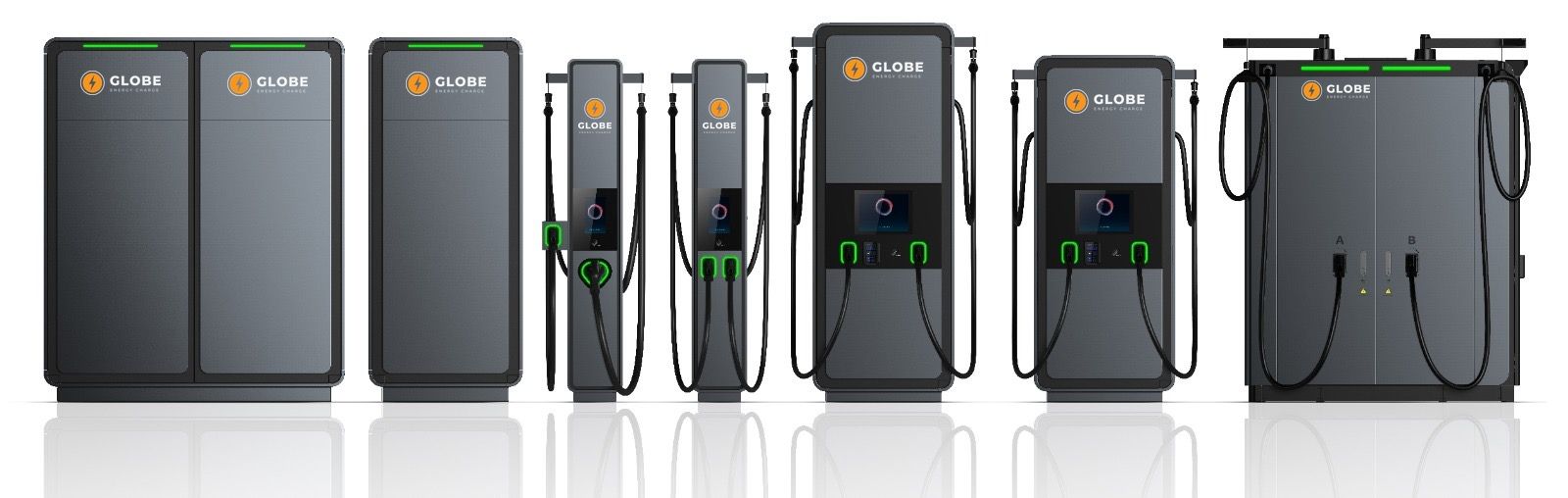
Chargers from battery-buffered 240 kW on a standard fuse to MCS charging at 1500 A.
All-in-one IC400
Up to 400 kW, 2 × CCS2
Power Cabinet
480 or 960 kW
MCS-dispenser D1500
1500 A continuous
Boost Charger
240 kW with its own battery
Operating temperature
−30 to +55 °C
Enclosure rating
IP55, Boost Charger IP54
Protocol
OCPP 1.6J
Connection
4G or Ethernet
Battery storage
Stationary batteries for business, from cabinet to container.
A battery storage cuts power peaks, acts as a buffer where the grid is too weak and can be charged from solar panels. We supply batteries from several manufacturers and choose according to the plant, not the brand. Battery, inverter and charging can be delivered as one system with shared control.
Demand peaks
The battery takes the peaks
Weak grid
Buffer between grid and load
Solar panels
Stores its own power
Backup power
Power when the grid goes down
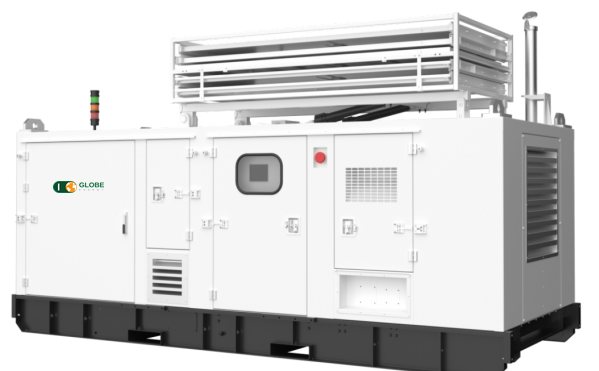
Diesel generator 80 kVA
MFS80S-1. Sound-insulated, with a Stage V engine.
Backup power for quay, workshop and plant. The controller starts the generator by itself when the grid goes down and switches back when the grid returns.
Globe Energy Norway AS is the official DENAIR distributor for Norway, Sweden, Denmark and the Baltics.
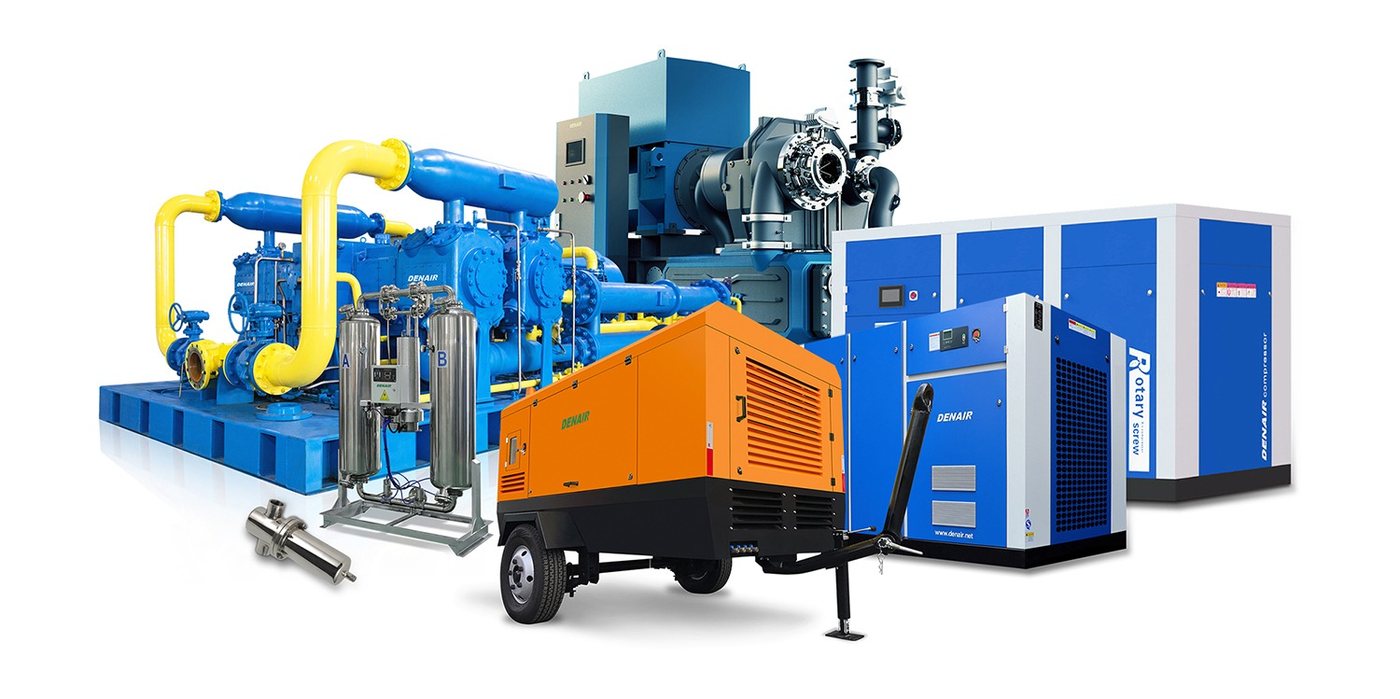
The DENAIR rangeCompressors and dryersAuthorised distributorCertificate from DENAIR
Compressed air for feeding, oxygenation and net cleaning, and oil-free compressed air where the air meets the product. We supply compressor, dryer and filter as one package, with tank-mounted machines and corrosion-protected tanks for operation by the sea.
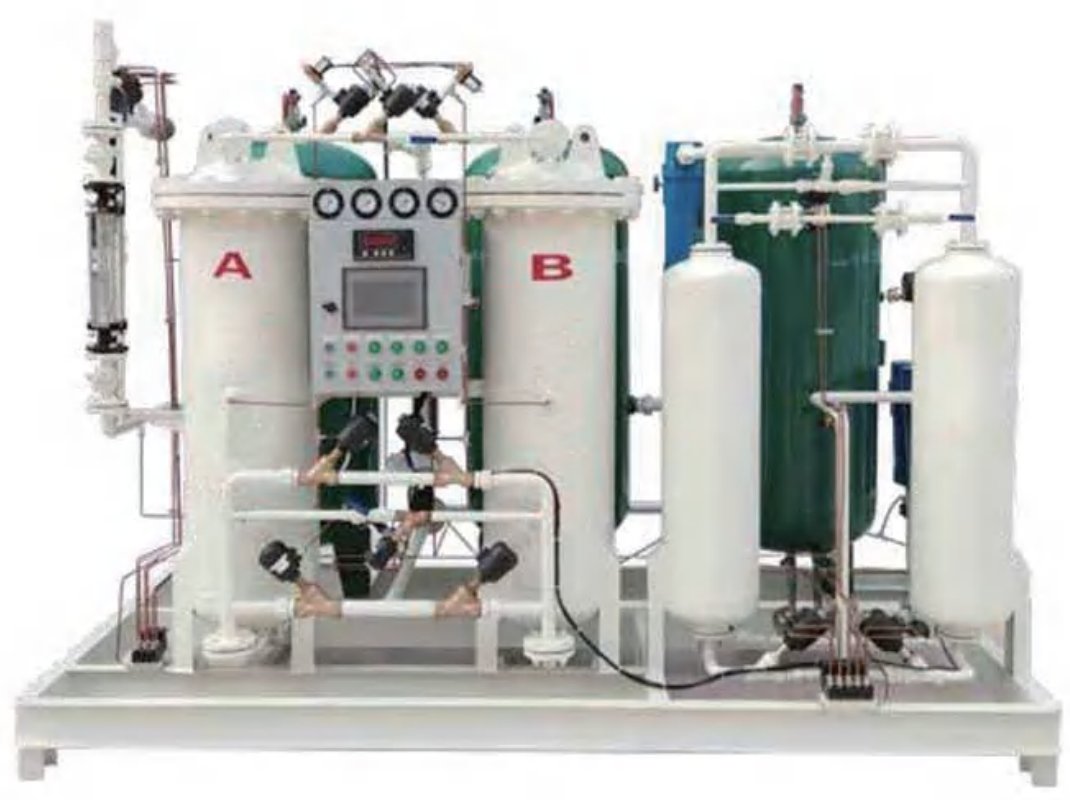
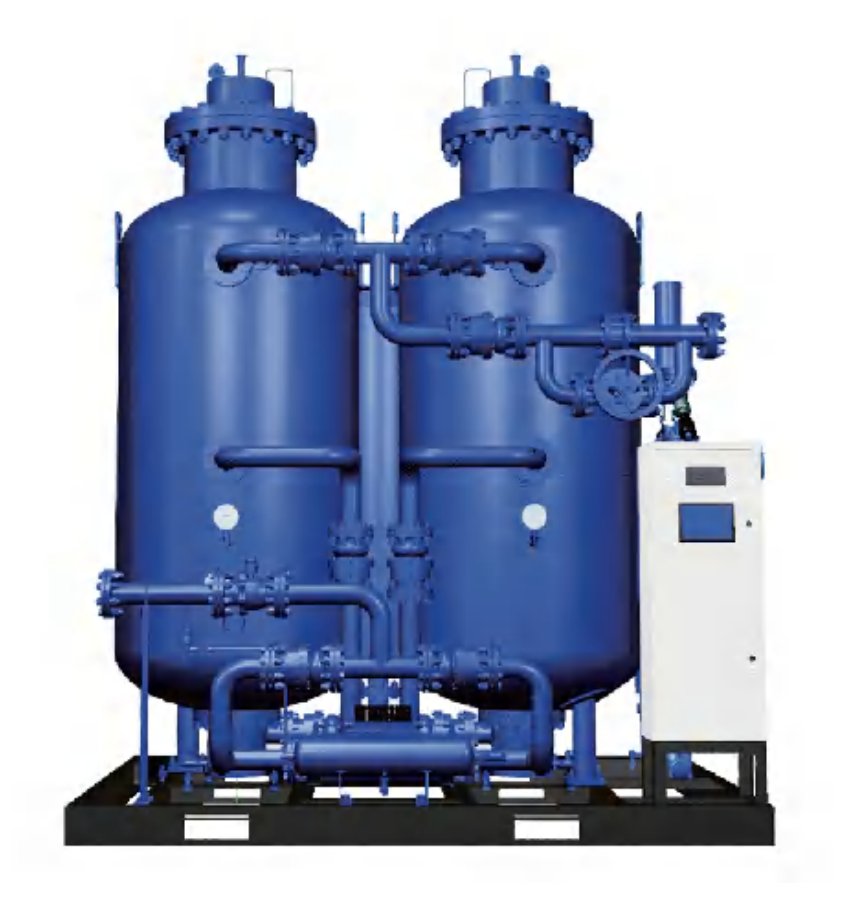
The generator separates oxygen or nitrogen from ordinary air using molecular sieves (PSA). Two towers take turns producing and cleaning themselves, so the gas flows steadily. The gas is made where it is used. Liquid gas can still serve as a reserve when consumption peaks.
A complete plant consists of compressor, air tank, dryer and filters, generator, process tank and gas tank. We supply the whole package.
On request we build the whole plant into a container, ready to place on the quay, the feed barge or the site. The container is corrosion-protected for seawater and salt air by our own surface treatment department, with a 25-year warranty.
Oxygen
Air demand 90 %
Air demand 93 %
Weight 90 % / 93 %
5 Nm³/h
0.9 m³/min
1.1 m³/min
700 / 750 kg
10 Nm³/h
1.9 m³/min
2.2 m³/min
950 / 1,100 kg
20 Nm³/h
3.8 m³/min
4.4 m³/min
1,680 / 1,700 kg
30 Nm³/h
5.7 m³/min
6.6 m³/min
2,100 / 2,150 kg
40 Nm³/h
7.6 m³/min
8.8 m³/min
2,300 / 2,400 kg
50 Nm³/h
9.5 m³/min
11.0 m³/min
2,600 / 2,850 kg
60 Nm³/h
11.3 m³/min
13.2 m³/min
3,000 / 3,200 kg
80 Nm³/h
15.1 m³/min
17.6 m³/min
3,800 / 4,000 kg
100 Nm³/h
18.9 m³/min
21.9 m³/min
4,850 / 5,000 kg
120 Nm³/h
22.7 m³/min
26.4 m³/min
5,400 / 5,900 kg
150 Nm³/h
28.4 m³/min
33.0 m³/min
6,800 / 7,400 kg
180 Nm³/h
34.0 m³/min
39.6 m³/min
7,700 / 8,500 kg
200 Nm³/h
37.8 m³/min
44.0 m³/min
8,500 / 9,100 kg
250 Nm³/h
47.3 m³/min
55.0 m³/min
10,000 / 10,500 kg
Air demand is air into the compressor in m³/min, at 8 bar and 20 °C. Weight is the generator without tanks.
Oxygen purity
90 % or 93 %
Nitrogen purity
95 to 99.999 %
Control
PLC and operator screen, usually Siemens
Monitoring
Online monitoring and non-conformity alarm
Container
Built in on request, corrosion-protected with a 25-year warranty
Filters for all makes
From Globe Filter, which is part of the same group.
In the group we also have Globe Filter. From there we supply filter elements and separators for compressed air, gas and vacuum, for compressors and plants of all makes. The plant you already have can get filters from us.
Filter elements
Compressed air, gas and vacuum
Separators
Compressed air, gas and vacuum
Fits
All makes
Supplied by
Globe Filter
Fast charging at the quay, without a new grid.
Boost Charger has its own battery. It charges gently from an ordinary connection and gives 240 kW fast charging when the vehicle arrives. You do not have to wait for the grid to be expanded.
There are several support schemes for emission cuts and electrification, and they change all the time. We check what applies to your project. We also help with financing, such as leasing or instalments.
Load, operating time, grid and space, so the plant is correctly sized from day one.
We check the support
Which schemes are open now, and what your project can get.
We calculate the plant
Diesel, electricity, emissions and cost with your own figures.
You decide
When the answer arrives, you choose whether and how to proceed.
Service that never sleeps.
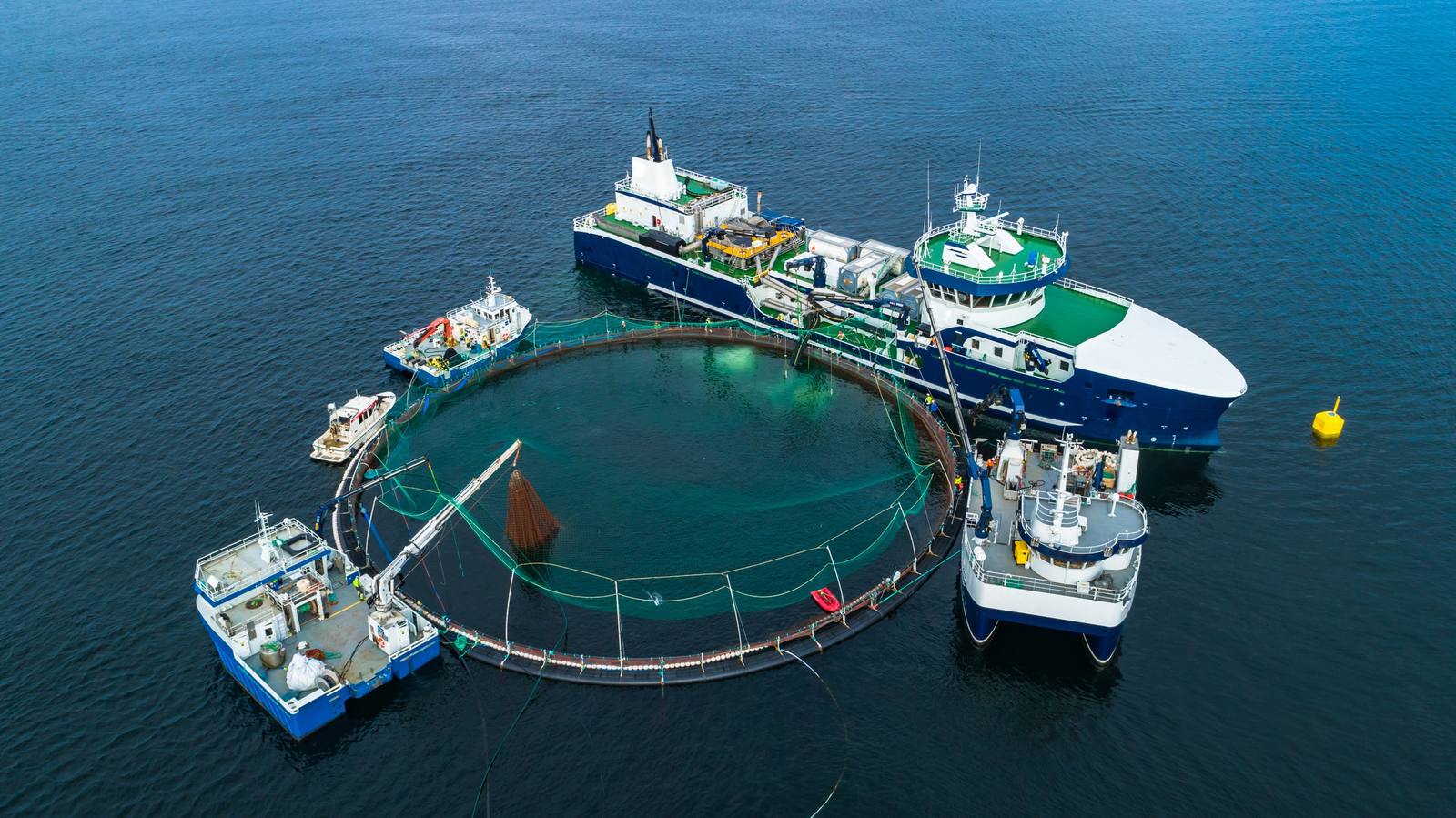
Well boat and service boats at the net pen
On-call service around the clock
On-call telephone 24/7, all year, with service partners throughout the Nordic countries.
Remote monitoring
The equipment has a cloud connection, so operation and faults can be followed without anyone having to go out to the barge or quay.
Warehouse and workshop
Our own warehouses in the Nordic countries and the Baltics, and our own workshops where we replace battery cells and repair electrical equipment.
Corrosion protection
Our own department for surface treatment in Norway and Sweden. The treatment can be delivered with a 25-year guarantee as an additional service, also in marine environments.
Adapted to the plant
Voltage, power, battery capacity, tank and control are adapted to the requirements of your plant.
Installation
Installation and commissioning are carried out by our own technicians.
From a fishing family in Lofoten.
Globe Energy was founded by Ingemar Stenslaett. His father is from Lofoten and was a fisherman. So was his grandfather, and it has been that way for many generations back.
Equipment that stands on a quay or a barge must work when it blows, when it freezes and when nobody has time to wait. That is why Globe Energy has a dedicated focus on those who work by the sea.
We know what is demanded of people and machines in this environment.
Ingemar Stenslaett, founder and CEO
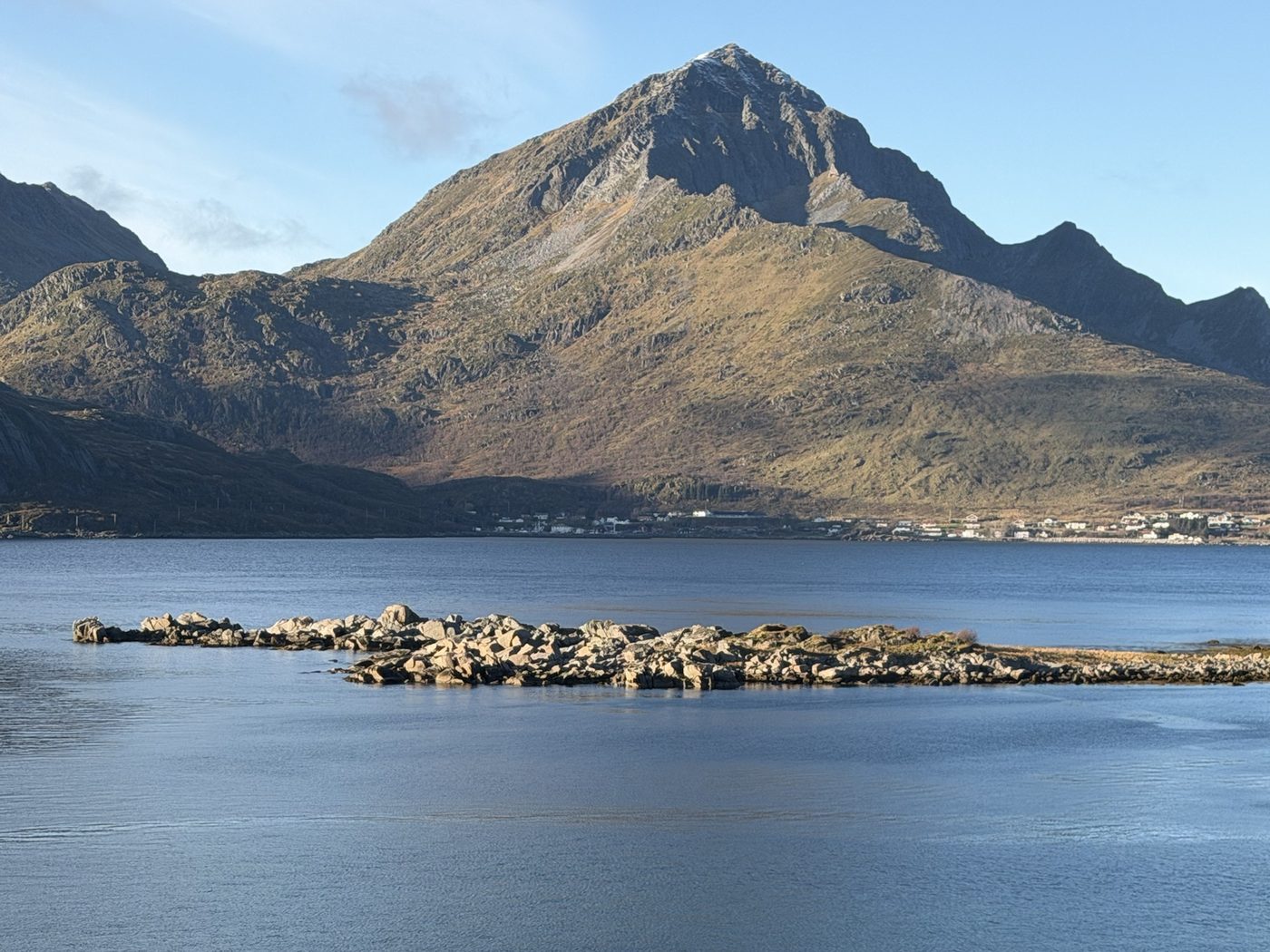
The islet in Nappstraumen, Lofoten. Ingemar has fished here since he was little.
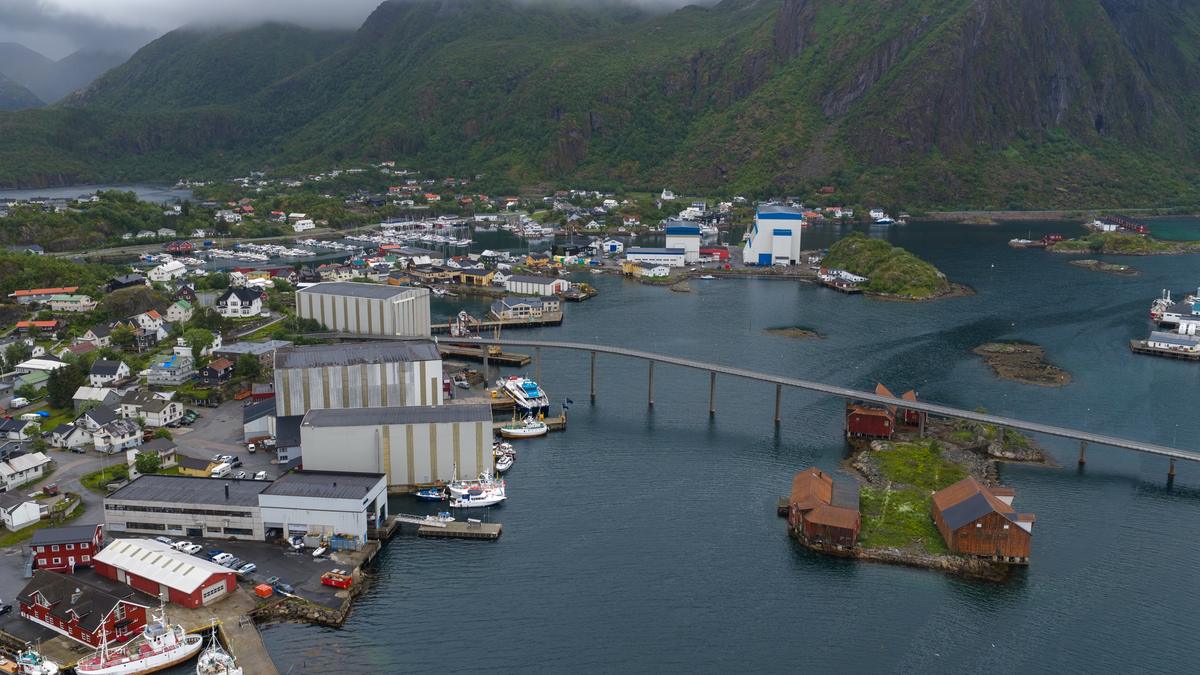
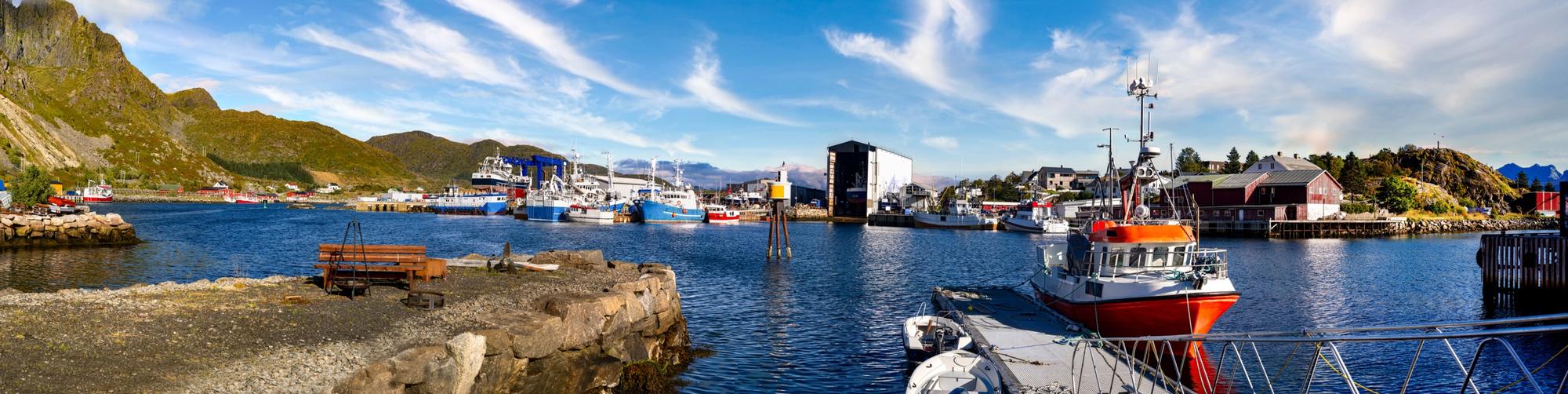
Ballstad in Lofoten. This is where Ingemar's family had fishing boats for several generations.
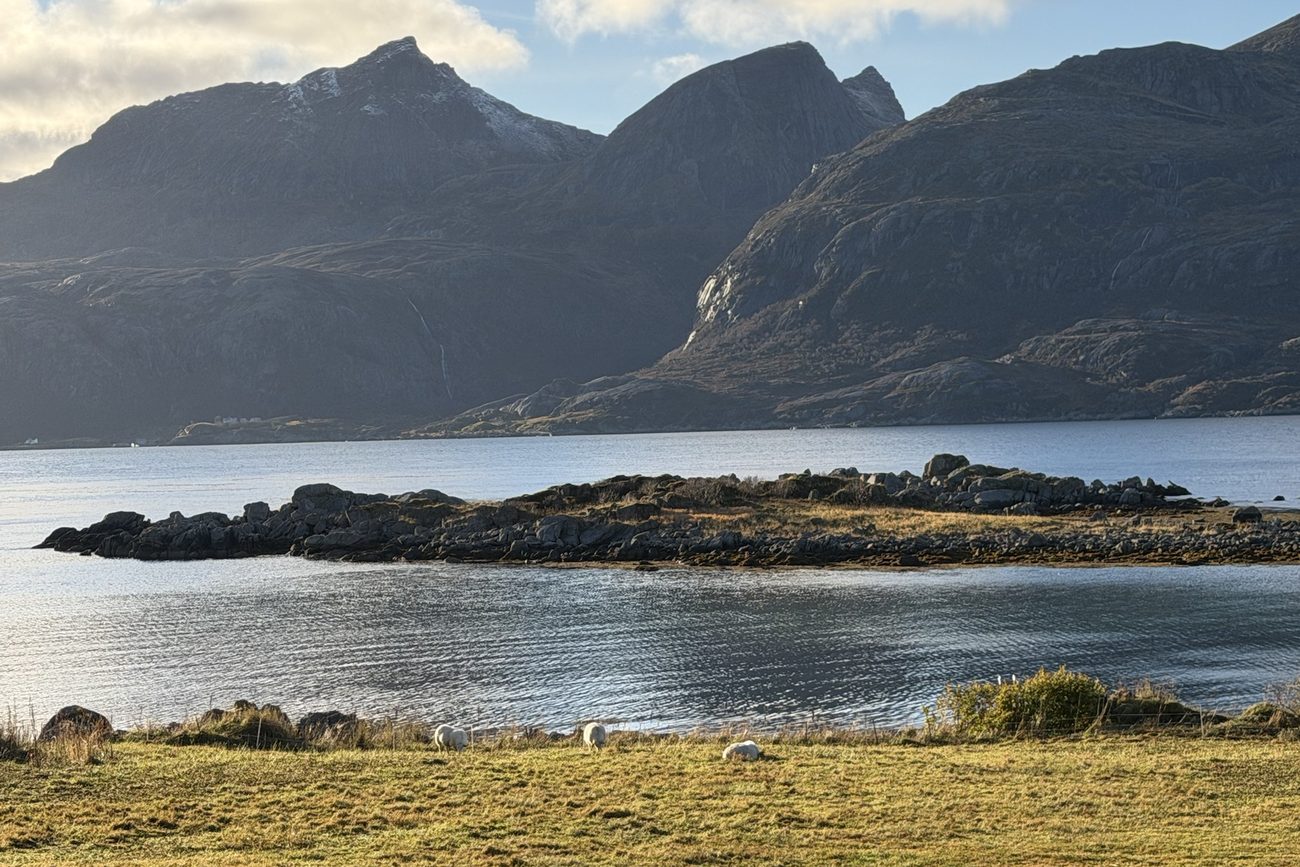
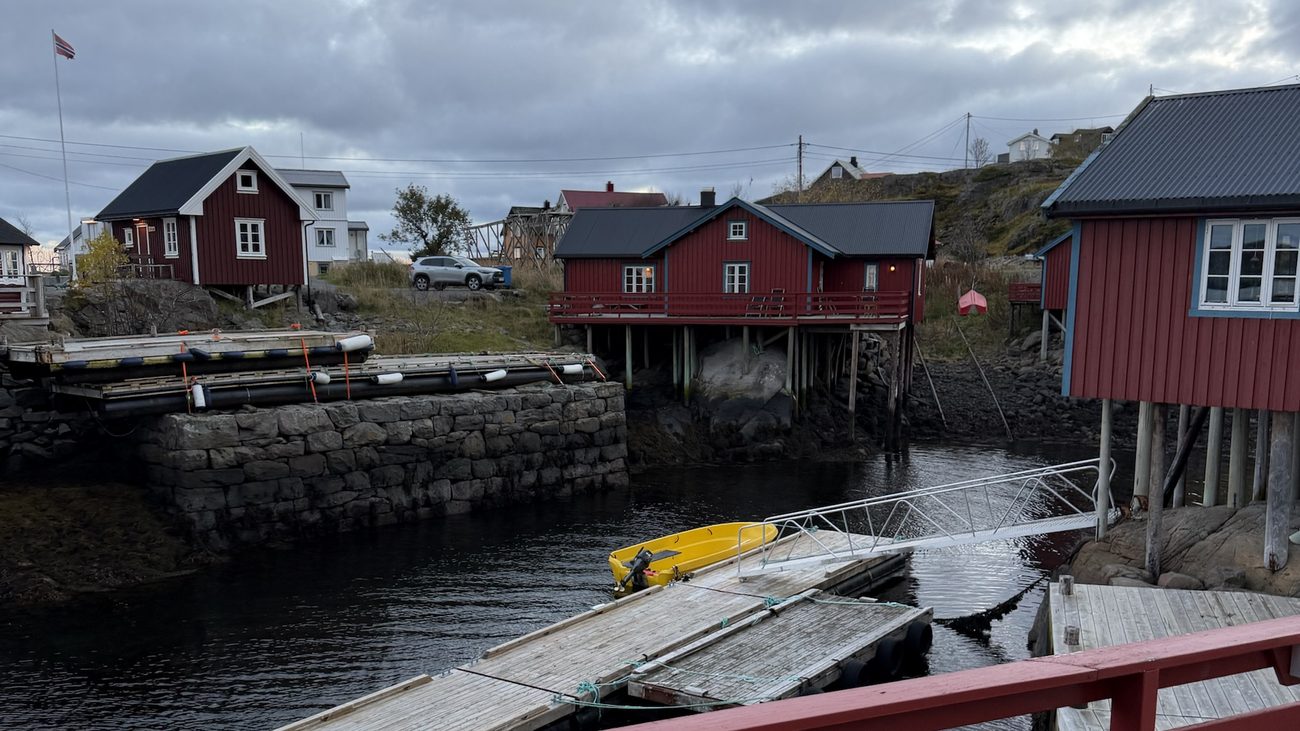
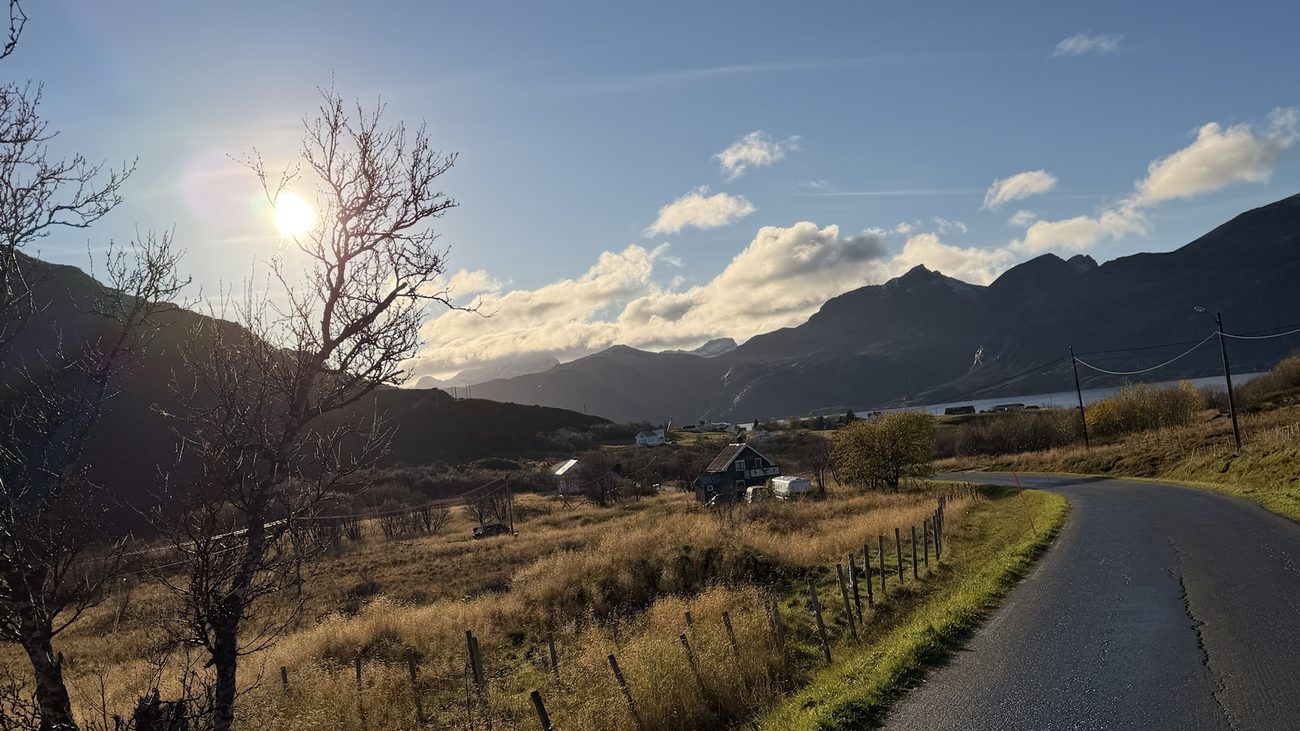
NappstraumenGrazing by the seaRorbuer, fishermen's cabinsAutumn light in October
The photos were taken by Ingemar in Lofoten in October 2026.
The people behind it
Ingemar StenslaettCEO
Kenth LassenPurchasing and sales
Runar HellsrandService Manager
Questions and answers.
How much diesel does a hybrid power station save?
It depends on how low the load is today. A generator running around the clock at low load has the most to gain. Use the test program "Hybrid operation" with your own figures for a first estimate.
How much energy can a fish farm save?
It depends on the site. At sea, feeding uses the most energy, and many feed barges generate their electricity with diesel generators. On the page Save energy we have collected nine measures with figures and sources. Calculate with your own figures in the test bench.
How large mobile battery chargers can you supply?
From 203 kWh on a trailer to 3,344 kWh in a container, with charging power up to 2,400 kW and up to ten charging outlets. From 836 kWh they can be delivered with an MCS outlet for heavy vehicles.
Do we need a stronger grid to charge at the quay?
Not necessarily. A battery between the grid and the charger charges gently and delivers high power when needed. Boost Charger can be connected to 32, 64 or 125 A.
Can the equipment stand outdoors by the sea in winter?
The fast chargers are specified for operation from −30 °C to +55 °C and have enclosure rating IP55 (Boost Charger IP54). The mobile container battery chargers are specified from −30 °C to +50 °C. The hybrid stations deliver power down to −20 °C. We clarify the corrosion protection for each plant.
Which compressors do you supply?
DENAIR. Globe Energy Norway AS is the official DENAIR distributor for Norway, Sweden, Denmark and the Baltics. The range covers screw compressors from 4 to 355 kW, oil-free compressors and dryers. With the image analysis you can photograph the compressor you have today and get a model suggestion.
Do you have filters for compressors of other brands?
Yes. Globe Filter, which is part of the same group, supplies filter elements and separators for compressed air, gas and vacuum for all makes.
Can you adapt the equipment to our plant?
Yes. Voltage, power, battery capacity, tank and control are adapted to the requirements of the plant.
Where do I find the datasheets?
Under each product in "Equipment" the datasheets are available as PDF (in Norwegian). If a datasheet is missing, write to post@globemarine.no.
Why are there no prices here?
Each plant is put together according to need. Request a quotation and you get a price for exactly your project.
Request a quotation.
Briefly tell us what is on the quay, barge or workshop today, and what it uses. We reply by e-mail.