

Aquaculture · Energy

How aquaculture cuts its energy use.

Feeding, pumping, compressed air and oxygen need energy around the clock. Here we have collected figures from public sources and nine measures that cut consumption. The figures are examples from the industry, not promises for your site.

Where does the energy go?

At sea

  • Feeding

    Feeding is the most energy-intensive process at a site.

    Source: DNV GL (2018)

  • More than half

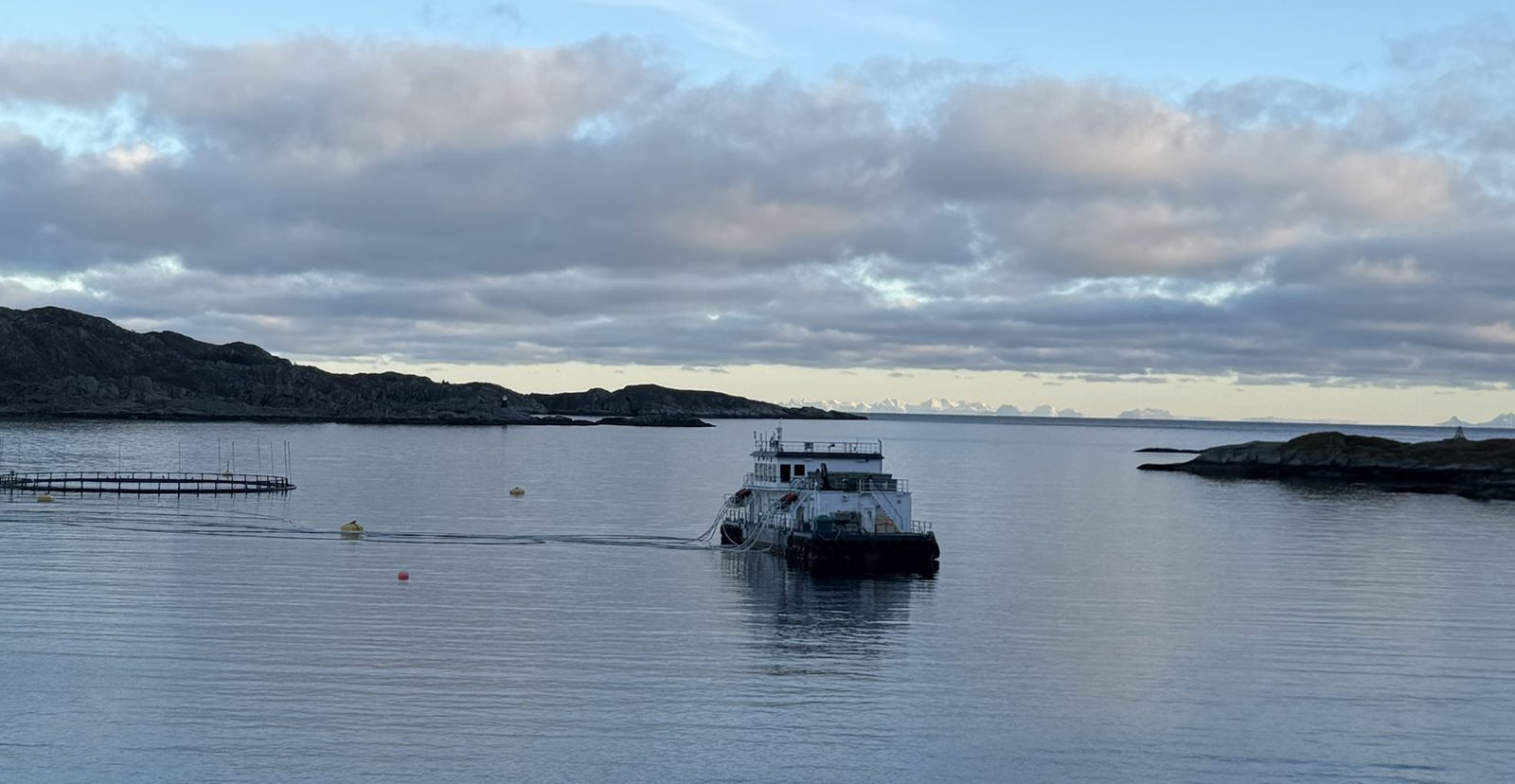
    More than half of the sites along the coast have shore power. On the feed barges, the diesel generators are being replaced by shore power and hybrid systems.

    Source: iLaks

  • 80 litres

    DNV GL assumes around 80 litres of diesel per harvested tonne on barges without shore power, in a range from 52 to 120.

    Source: DNV GL (2018)

  • At the pens

    Most workboats burn most of their diesel while working at the pens.

    Source: DNV GL (2018)

On land

  • 6–9 kWh

    Land-based farming uses between 6 and 9 kWh of energy per kilo of salmon produced.

    Source: iLaks, analysis by SINTEF funded by FHF

  • Second largest

    Energy is the second-largest cost in a RAS facility, after feed.

    Source: iLaks

  • Pumps and heat

    In a modelled RAS facility for post-smolt, the pumps accounted for around 45 % of the energy demand, and at least a third went to the thermal energy needs of the fresh water.

    Source: Aquahoy, on a simulation study

  • One tenth

    Compressed air accounts for around a tenth of the electricity a company uses. In industry, 10 % of the energy goes to compressed air.

    Source: Energikontoret Region Örebro län, Teknisk Ukeblad

Nine measures that cut consumption.

The figures come from public sources. In the test programmes you enter your own figures.

On the barge and at the pens

1

Battery and generator in hybrid operation

A generator running around the clock at low load burns a lot of diesel per kilowatt-hour. With a battery, the generator runs for only a few hours at a good load and charges the battery, and the battery covers the rest of the day. In an example from the industry, the running time went from the whole day to around three hours, according to iLaks.

Source: iLaks

24 → 3 hgenerator running time per day in the example
2

Shore power, with a battery where the grid is weak

An electric motor uses the energy better than a diesel generator. DNV GL assumes 67 % lower energy use when the barge has shore power, and estimated in 2018 that up to 80 % of production could be electrified profitably or at a relatively low cost. Where the grid is weak, a battery takes the peaks, so the site needs less power from shore.

Source: DNV GL (2018), iLaks

67 %lower energy use with shore power
3

Electricity for the work at the pens

The equipment on the workboat can run on electricity from the barge while the boat lies at the pen. DNV GL estimates that this can cut up to 75 % of a workboat's diesel, without a battery in the boat. It requires the barge to have shore power. Boats with batteries can charge at the quay and at the barge.

Source: DNV GL (2018)

Up to75 %of a workboat's diesel, according to DNV GL

Compressed air

5

Fix the leaks

Fixing leaks is the single measure with the largest potential in an EU study. The study estimates 20 % lower energy use when the leaks are fixed, and that the measure is applicable and cost-effective in four out of five systems.

Source: EU study, as cited by ACEEE

20 %lower energy use, according to an EU study
6

Change filters in time

A clogged filter causes a pressure drop, and the compressor has to work harder to hold the pressure. The EU study estimates 2 % lower energy use with more frequent filter replacement. We have filters for compressors of all makes.

Source: EU study, as cited by ACEEE, Teknisk Ukeblad

2 %lower energy use with more frequent filter changes
8

Use the heat from the compressor

Most of the electricity a compressor uses turns into heat. 80–90 % can be recovered and used to heat water or premises. It has value where the site can use the heat.

Source: Teknisk Ukeblad

80–90 %of the electricity can be recovered as heat

Oxygen

9

Make the oxygen on site

A generator separates oxygen from ordinary compressed air, and the gas is made where it is used. Liquid oxygen can still be kept as a reserve when consumption peaks.

90–93 %purity, from 5 to 250 Nm³/h per generator

Calculate for your site.

The test programmes answer immediately. Enter your own figures, and we will calculate precisely when you request a quote.